
Vietnam Immigration E-Visa System 2026: Complete Guide for First-Time Travelers
Planning your first trip to Vietnam can be exciting, but understanding the visa process is one of the most important steps before departure. For many international visitors, the Vietnam Immigration E-Visa System is now the most convenient way to apply for permission to enter Vietnam online. Instead of visiting an embassy or preparing complicated paperwork, travelers can submit their application digitally, pay the visa fee online, and receive the approved e-visa electronically.
Vietnam’s official e-visa system allows foreigners outside Vietnam to apply online for an electronic visa. The e-visa can be valid for up to 90 days and may be issued for single or multiple entries, depending on the applicant’s travel plan. The official government e-visa fee is USD 25 for single entry and USD 50 for multiple entry.
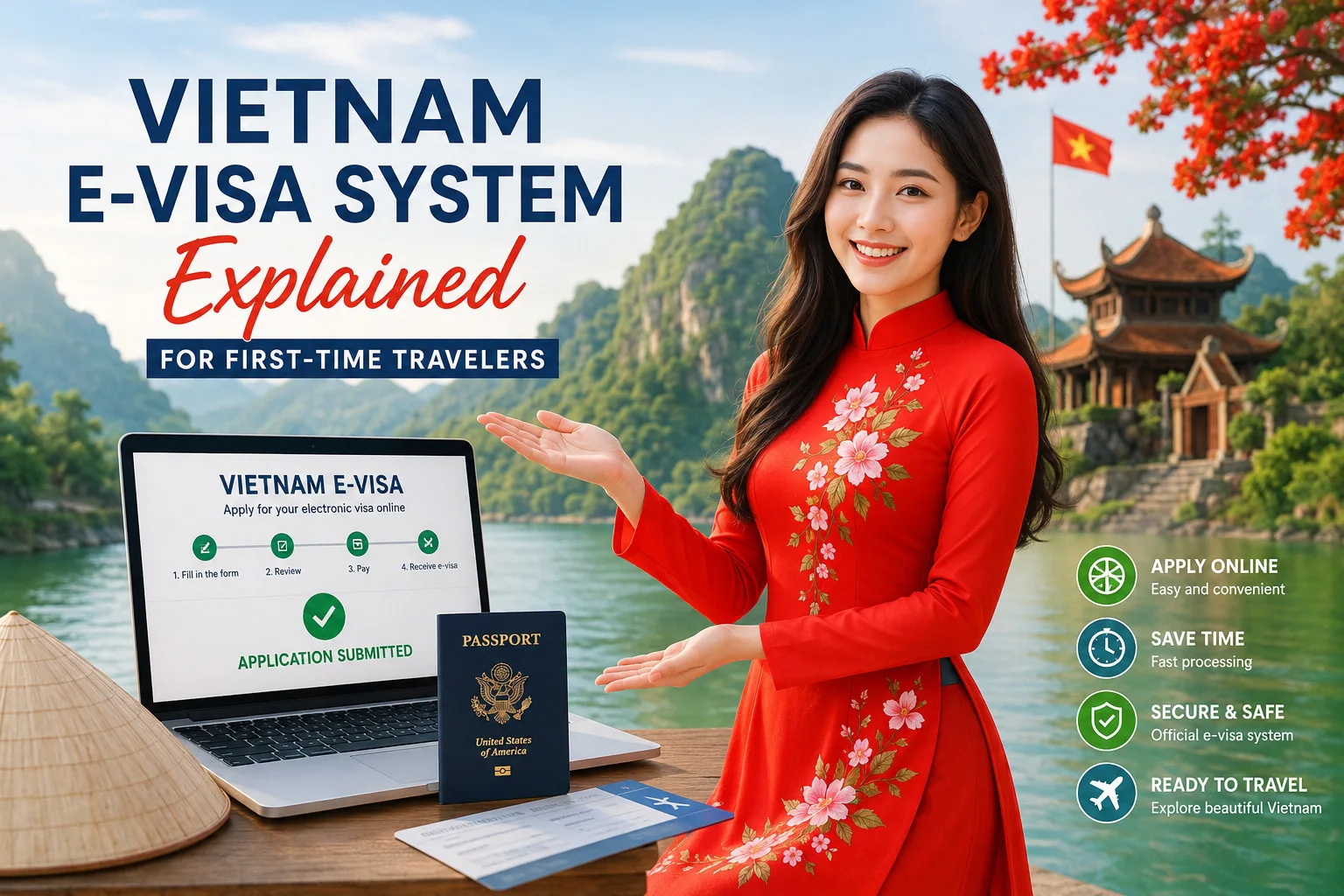
What Is the Vietnam Immigration E-Visa System?
The Vietnam Immigration E-Visa System is an online platform managed by the Vietnam Immigration Department under the Ministry of Public Security. It is designed to help foreign travelers apply for a Vietnam visa through an electronic process. Applicants upload their passport information, portrait photo, travel details, and pay the required government fee online. Once approved, the visa is issued as a digital document that travelers can download, print, and present when entering Vietnam.
The official Vietnam e-visa portal has operated through government domains including evisa.gov.vn, and the older immigration portal has announced the use of new official domains for the electronic visa system.
For first-time travelers, this system is especially useful because it removes the need to visit a Vietnamese embassy or consulate in many cases. It also allows applicants to check their visa status online using their registration code, email, and date of birth.
Who Should Use the Vietnam E-Visa System?
The Vietnam e-visa system is suitable for tourists, business visitors, short-term travelers, and people entering Vietnam for approved purposes. It is commonly used by travelers who want a simple online application process before arriving in Vietnam.
Foreigners outside Vietnam can personally apply for an e-visa or apply through requesting agencies and organizations. The official immigration portal states that Vietnam e-visas are valid for a maximum of 90 days and may be single or multiple entry.
This option is ideal if you:
- Are traveling to Vietnam for the first time.
- Want to apply online before departure.
- Need a tourist or short-term business visa.
- Want to avoid embassy visits.
- Need a visa document that can be checked before flying.
- Plan to enter Vietnam through an eligible airport, land border, or seaport.
Vietnam E-Visa Validity and Entry Type
One of the biggest advantages of the Vietnam e-visa is flexibility. Travelers can apply for a visa valid for up to 90 days. Depending on their travel needs, they may choose a single-entry or multiple-entry visa.
A single-entry e-visa allows the traveler to enter Vietnam once. After leaving Vietnam, the visa can no longer be used, even if the validity period has not expired. A multiple-entry e-visa allows the traveler to enter and exit Vietnam several times within the approved validity period.
This is important for travelers planning to visit neighboring countries such as Thailand, Cambodia, Laos, or Singapore during the same trip. If you plan to leave Vietnam and return again, a multiple-entry e-visa is usually the better option.
Vietnam E-Visa Fees
The official government fee for Vietnam e-visa applications is USD 25 for a single-entry visa and USD 50 for a multiple-entry visa. These fees are paid online during the application process and are generally non-refundable, even if the application is refused or the traveler enters incorrect information.
Some visa support agencies may charge additional service fees for checking documents, assisting with urgent cases, correcting errors, or guiding applicants through the process. These service fees are separate from the government fee.
Documents Required for Vietnam E-Visa Application
Before starting your application, prepare all required documents carefully. First-time travelers should pay special attention to image quality and passport details because small mistakes can delay approval.
You usually need:
- A passport valid for at least six months from the intended entry date.
- A clear scan or photo of the passport information page.
- A recent portrait photo, looking straight, without glasses.
- Travel information, including arrival date and entry point.
- A valid email address.
- A debit or credit card for online payment.
The official immigration application instructions require applicants to upload the passport data page and a portrait photo looking straight without glasses. After submitting information, applicants receive a registration code, then pay the e-visa fee.
Step-by-Step Guide to Apply for Vietnam E-Visa
Step 1: Visit the Official Vietnam E-Visa Website
Start by visiting the official Vietnam e-visa portal. First-time travelers should make sure they are using the correct government website, not a fake or unofficial copy. The official system allows foreigners outside Vietnam to apply personally online.
Step 2: Fill in the Online Application Form
Enter your personal information exactly as shown in your passport. This includes full name, gender, date of birth, nationality, passport number, passport issue date, and passport expiry date.
Do not use nicknames, shortened names, or different name order unless the form specifically requires it. Any mismatch between your passport and e-visa may cause problems when boarding your flight or entering Vietnam.
Step 3: Upload Passport and Portrait Photos
Upload a clear passport data page and a proper portrait photo. The portrait should show your full face, looking straight, without glasses. The passport page must be readable, with no glare, blur, or cropped information.
Poor-quality images are one of the most common reasons applications are delayed or rejected.
Step 4: Choose Visa Type and Entry Information
Select whether you need a single-entry or multiple-entry visa. Then enter your expected arrival date, length of stay, and intended entry checkpoint.
This step is very important. If your entry port or travel dates are wrong, you may need to correct the application or apply again.
Step 5: Review All Information Carefully
Before payment, review every detail. Check your passport number, full name, date of birth, nationality, arrival date, and entry point.
Many visa problems happen because applicants submit incorrect passport numbers, wrong dates, or misspelled names. Once the e-visa is issued, changes may not be easy or may require a new application.
Step 6: Pay the E-Visa Fee
Pay the government fee online. The official fee is USD 25 for single entry and USD 50 for multiple entry. After payment, save your registration code because you will need it to check your application status.
Step 7: Check Status and Download Your E-Visa
After submission, you can check your status online using your registration code, email, and date of birth. Once approved, download the e-visa PDF and print a copy before traveling.
Vietnam E-Visa Processing Time
The official immigration portal states that applications are processed in around three working days after fee payment. However, actual processing may vary depending on application volume, public holidays, missing information, or technical issues.
For first-time travelers, it is safer to apply at least 7–10 working days before departure. If you are traveling during peak seasons such as Tet holiday, summer vacation, Christmas, or New Year, apply even earlier.
Common Mistakes First-Time Travelers Should Avoid
1. Entering the Wrong Passport Number
A single wrong digit can make your e-visa invalid. Always copy the passport number exactly from your passport.
2. Uploading a Blurry Passport Photo
If the passport scan is unclear, the immigration system may not process the application smoothly. Use a high-quality image.
3. Choosing the Wrong Entry Port
Your e-visa must match your travel plan. If you choose the wrong checkpoint, you may face entry problems.
4. Applying Too Late
Do not wait until the last minute. Even though normal processing may take a few working days, delays can happen.
5. Confusing E-Visa With Visa on Arrival
Vietnam e-visa is issued online before travel. Visa on arrival usually requires an approval letter and is processed at the airport. Travelers should understand the difference before choosing the right option.
6. Not Printing the E-Visa
Although the visa is electronic, travelers should print a copy and keep a digital backup on their phone or email.
Vietnam E-Visa vs. Visa on Arrival
For most first-time travelers, the e-visa is simpler because the application, payment, and approval are completed online before departure. Visa on arrival may still be used in some cases, but it normally requires an approval letter, passport photos, a visa application form, and stamping fee at the airport.
The e-visa is usually better if you want:
- A fully online application.
- A visa document before flying.
- Entry through airports, land borders, or seaports.
- Less paperwork on arrival.
Visa on arrival may be considered in special cases, urgent situations, or when travelers need assistance from a visa agency.
Do First-Time Travelers Need Visa Support?
Many travelers can apply directly through the official e-visa website. However, first-time travelers may choose professional visa support if they are unsure about the process, have urgent travel plans, made mistakes in their application, or need help checking documents before submission.
Visa support services may help with:
- Reviewing passport and photo quality.
- Checking application information.
- Advising on single or multiple entry.
- Supporting urgent or emergency cases.
- Helping travelers understand entry requirements.
- Guiding applicants when an application is delayed or denied.
This can be useful for business travelers, families, elderly travelers, cruise passengers, or people who do not feel confident using online government forms.
Practical Tips Before Traveling to Vietnam
Before your flight, make sure you have:
- Printed e-visa approval.
- Passport valid for at least six months.
- Return or onward ticket if required by airline.
- Hotel booking or address in Vietnam.
- Travel insurance.
- Digital copy of your e-visa saved on your phone.
- Correct entry date and checkpoint.
You should also check your airline’s boarding requirements before departure. Airlines may refuse boarding if your visa information does not match your passport.
Frequently Asked Questions
Is Vietnam e-visa available online?
Yes. Foreign travelers can apply online through the Vietnam Immigration e-visa system. The application includes filling out the form, uploading documents, paying the fee, and receiving the result online.
How long is Vietnam e-visa valid?
Vietnam e-visa can be valid for a maximum of 90 days, depending on the approved application. It can be single entry or multiple entry.
How much does Vietnam e-visa cost?
The official fee is USD 25 for single entry and USD 50 for multiple entry.
Can I apply for Vietnam e-visa by myself?
Yes. Foreigners outside Vietnam can personally apply for an e-visa through the official online system.
Should I apply early?
Yes. Although processing may take around three working days, first-time travelers should apply early to avoid delays, mistakes, or holiday processing issues.
Conclusion
The Vietnam Immigration E-Visa System is one of the easiest ways for first-time travelers to apply for a Vietnam visa online. With a valid passport, clear photos, accurate travel information, and online payment, applicants can complete the process without visiting an embassy.
For a smooth trip, always use the official e-visa portal, check every detail before payment, apply early, and print your approved e-visa before departure. If you are unsure about the process, traveling urgently, or need help avoiding mistakes, professional Vietnam visa support can make the application easier and safer.
Contact for Urgent Visa Support
- Hotline / WhatsApp / Zalo: +84986979330
- Email: support@vietnamevisaservice.vn
Note: vietnamevisaservice.vn is a commercial/personal website, NOT an official government website. We operate as a private agent and charge a fee for application services. If you do not require our simplified forms and visa application support, you can apply directly on the official government website.