
Vietnam Travel Visa Application Online: Simple Step-by-Step Process Explained
Introduction
Vietnam is one of the most attractive destinations in Southeast Asia, known for its beautiful landscapes, rich culture, delicious food, and friendly people. Whether travelers plan to visit Hanoi, Ha Long Bay, Da Nang, Hoi An, Ho Chi Minh City, or Phu Quoc, preparing a valid Vietnam travel visa is one of the most important steps before departure.
Today, applying for a Vietnam travel visa has become much easier thanks to the online visa system. Instead of visiting an embassy or consulate, many foreign travelers can complete the Vietnam visa application online, pay the visa fee electronically, and receive the result through email or the official e-visa portal. The official Vietnam e-visa system allows foreigners outside Vietnam to apply online, upload required documents, make payment, and receive the e-visa result electronically.
This guide explains the simple online process for applying for a Vietnam travel visa, including who needs a visa, what documents are required, how to submit the application, common mistakes to avoid, and when travelers should consider professional visa support.
What Is a Vietnam Travel Visa?
A Vietnam travel visa is an official entry document that allows foreign citizens to enter Vietnam for tourism, short visits, family visits, business trips, or other permitted purposes. For most short-term visitors, the Vietnam e-visa is now one of the most convenient options because the entire process can be completed online.
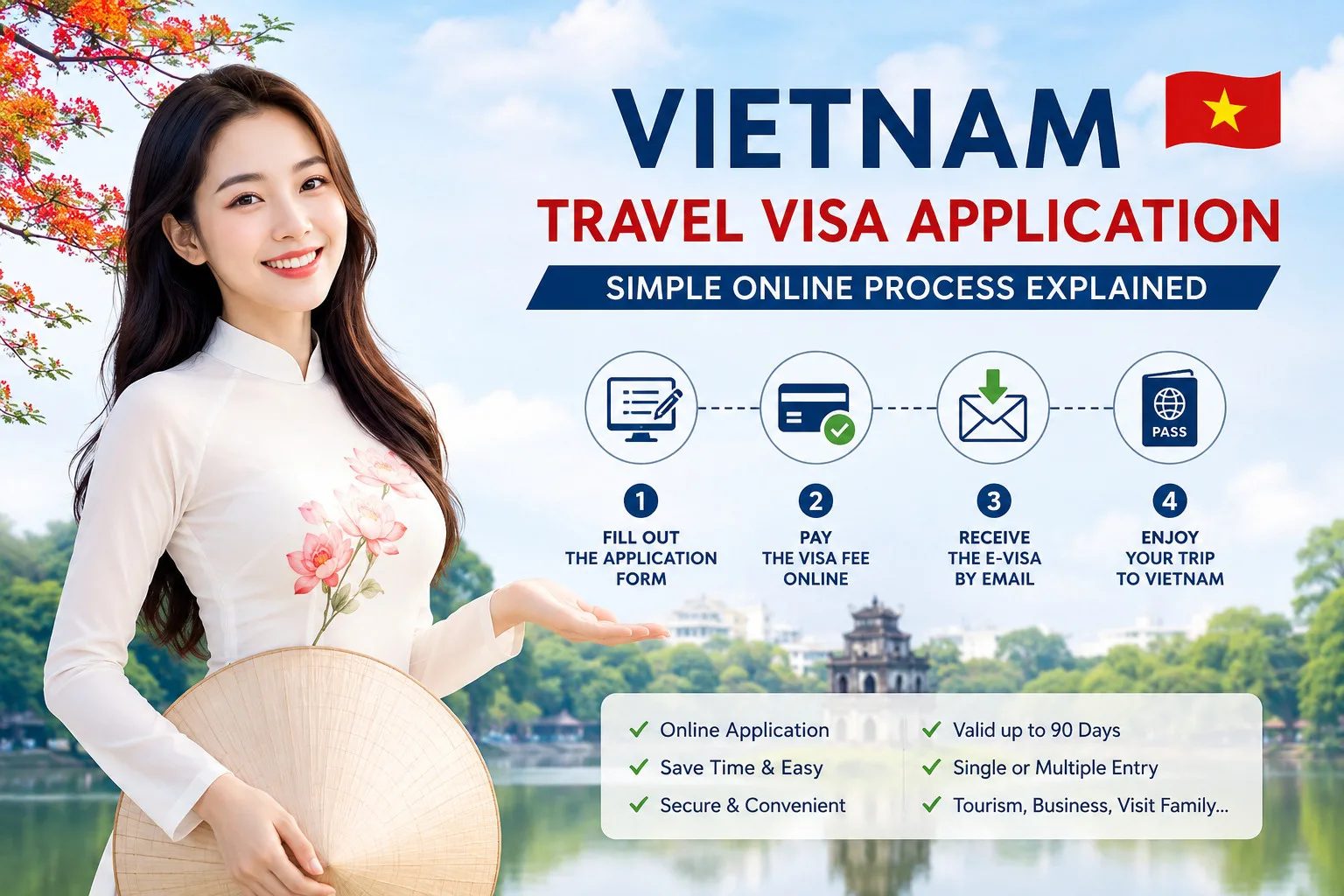
According to the Vietnam Immigration e-visa portal, Vietnam e-visa is issued electronically and can be valid for up to 90 days, with single-entry or multiple-entry options depending on the applicant’s travel plan.
This means travelers can apply before arriving in Vietnam and present the approved e-visa at an eligible international airport, land border, or seaport.
Why Apply for a Vietnam Visa Online?
Applying for a Vietnam visa online offers several advantages:
- No need to visit a Vietnamese embassy or consulate
- Application can be completed from any country
- Documents are submitted digitally
- Visa result can be checked and downloaded online
- Suitable for tourists, business travelers, and short-term visitors
- Saves time compared with traditional paperwork
The official e-visa system explains the process in three basic steps: fill out the application form, complete payment, and receive the e-visa online.
For travelers who are unfamiliar with the system, online visa support services may also help review documents, check information, and reduce the risk of mistakes before submission.
Who Can Apply for a Vietnam E-Visa?
Vietnam e-visa is available for foreigners outside Vietnam who want to enter the country. Applicants can apply personally through the official portal or through requesting agencies and organizations.
Before applying, travelers should check:
- Passport nationality
- Purpose of entry
- Intended date of arrival
- Length of stay in Vietnam
- Entry and exit port
- Single-entry or multiple-entry requirement
- Passport validity
In many cases, travelers planning a short holiday or business trip can use the Vietnam e-visa system. However, some travelers may need another visa type depending on their nationality, purpose of visit, or special travel situation.
Vietnam E-Visa Validity and Entry Type
The Vietnam e-visa can be valid for a maximum of 90 days and may be issued for single or multiple entry.
A single-entry visa allows the traveler to enter Vietnam once. After leaving Vietnam, the visa is no longer valid for re-entry.
A multiple-entry visa allows the traveler to enter and exit Vietnam multiple times within the approved visa validity period. This is useful for travelers who plan to visit nearby countries and return to Vietnam during the same trip.
Vietnam Travel Visa Requirements
To apply for a Vietnam travel visa online, applicants usually need to prepare:
- A valid passport
- A clear passport data page image
- A recent portrait photo
- Travel information
- Entry and exit port details
- Valid email address
- Online payment method
The official immigration portal requires applicants to upload the passport data page image and a portrait photo looking straight without glasses. After submitting information, the applicant receives a registration code, pays the e-visa fee, and the application is processed.
Travelers should make sure that the passport is valid for the intended travel period and that all information entered in the application matches the passport exactly.
Vietnam E-Visa Fee
The official Vietnam e-visa fee is USD 25 for a single-entry e-visa and USD 50 for a multiple-entry e-visa. The fee is paid through the e-visa portal and is generally non-refundable if the visa is not granted.
Applicants should carefully review all information before payment because mistakes may lead to delays, rejection, or the need to submit a new application.
Step-by-Step Vietnam Travel Visa Application Process
Step 1: Visit the Official Vietnam E-Visa Website
Travelers can begin the process by visiting the official Vietnam e-visa portal. The current official system is available at evisa.gov.vn. The previous immigration portal also provides information and redirects users to the updated system.
Applicants should always use the correct official website or a trusted visa support provider to avoid fake websites or incorrect instructions.
Step 2: Fill Out the Online Application Form
The applicant must enter personal information exactly as shown on the passport. This includes full name, date of birth, nationality, passport number, passport issue date, passport expiry date, and travel details.
It is important to check spelling, passport number, date format, and entry port carefully. Even a small mistake may cause problems when boarding the flight or entering Vietnam.
Step 3: Upload Passport and Portrait Photos
Applicants must upload a passport data page image and a portrait photo. The portrait should be clear, recent, front-facing, and without glasses.
Common photo problems include blurry images, cropped passport pages, shadows, reflections, old photos, or photos that do not meet the required format. These issues can delay the visa result.
Step 4: Select Entry and Exit Information
Travelers must choose their intended entry and exit ports. This may include international airports, land borders, or seaports accepted by the Vietnam e-visa system.
The selected entry port should match the traveler’s actual arrival plan. If the traveler changes the arrival airport or border gate, they should check whether the e-visa remains valid for the new port.
Step 5: Review All Information
Before submitting, applicants should review every detail carefully:
- Full name
- Passport number
- Date of birth
- Nationality
- Visa validity dates
- Entry type
- Entry port
- Email address
- Uploaded images
Many visa problems happen because applicants submit incorrect information too quickly.
Step 6: Pay the Visa Fee Online
After completing the form, the applicant pays the e-visa fee online. The official fee is USD 25 for single entry and USD 50 for multiple entry.
Applicants should keep the registration code and payment confirmation because they may need them to check the visa status later.
Step 7: Check Visa Status and Download the E-Visa
After submission, applicants can check the application status online using the registration code, email, and date of birth. The official portal provides a search function for checking status and downloading the approved e-visa.
Once approved, travelers should download and print the e-visa. It is also recommended to keep a digital copy on a phone or email.
How Long Does Vietnam E-Visa Processing Take?
The official immigration portal states that the application is processed in 3 working days after payment.
However, travelers should apply earlier whenever possible. Processing may take longer during weekends, public holidays, peak travel seasons, or if the application requires correction.
A safe recommendation is to apply at least 7–10 days before departure. For urgent travel, travelers may consider professional visa support services to review available options.
Common Mistakes to Avoid
Many Vietnam visa applications are delayed or rejected because of avoidable mistakes. Common errors include:
- Incorrect passport number
- Wrong date of birth
- Misspelled full name
- Wrong nationality
- Low-quality passport scan
- Unqualified portrait photo
- Selecting the wrong entry port
- Applying too close to departure date
- Using an invalid email address
- Not checking the visa result before travel
Some visa guide sources also highlight photo and passport image problems as frequent causes of application delays.
To avoid these issues, applicants should prepare clear documents and review all information carefully before submission.
Vietnam E-Visa vs Visa on Arrival
Vietnam e-visa and visa on arrival are different.
Vietnam e-visa is applied online before travel and issued electronically. The traveler receives the approved e-visa before departure and presents it when entering Vietnam.
Visa on arrival usually requires an approval letter before flying to Vietnam. After arriving at an eligible airport, the traveler presents documents and pays a stamping fee to receive the visa sticker. Visa on arrival services often involve a service fee and a stamping fee.
For most tourists, the e-visa is simpler because it avoids waiting for a visa stamp at the airport. However, visa on arrival may still be considered in special cases, depending on the traveler’s situation.
When Should Travelers Use a Visa Support Service?
Although the Vietnam e-visa system is simple, some travelers may prefer professional support, especially if:
- They are applying for the first time
- They are not confident with English forms
- Their travel date is urgent
- Their previous application was delayed or rejected
- They need help checking documents
- They are unsure about visa type
- They travel with family or a group
- They need business visa or sponsored entry support
A reliable visa support service can help review the application, check photo quality, verify passport details, and guide the traveler through the process. This can reduce mistakes and save time, especially for urgent cases.
Tips for a Smooth Vietnam Entry
Before traveling to Vietnam, visitors should:
- Print the approved e-visa
- Keep a digital copy on phone and email
- Check passport validity
- Confirm entry port
- Make sure visa dates match travel dates
- Prepare hotel booking or travel itinerary if needed
- Arrive with the same passport used in the visa application
Travelers should also check airline requirements before departure because airlines may verify visa documents at check-in.
Final Thoughts
The Vietnam travel visa application process is now much easier than before. With the online e-visa system, travelers from many countries can apply from anywhere, upload documents, pay the fee online, and receive the result electronically.
The most important part is accuracy. Applicants should enter passport information correctly, upload clear photos, choose the right entry port, and apply early enough before departure. For travelers who need extra help, urgent support, or document checking, using a trusted Vietnam visa service can make the process smoother and reduce unnecessary stress.
A well-prepared visa application helps travelers start their Vietnam journey with confidence and enjoy everything the country has to offer—from ancient towns and beautiful beaches to vibrant cities and unforgettable food.
Contact for Urgent Visa Support
- Hotline / WhatsApp / Zalo: +84986979330
- Email: support@vietnamevisaservice.vn
Note: vietnamevisaservice.vn is a commercial/personal website, NOT an official government website. We operate as a private agent and charge a fee for application services. If you do not require our simplified forms and visa application support, you can apply directly on the official government website.