
Vietnam Travel Visa Guide 2026: Requirements, Fees & Processing Time for Foreign Travelers
Introduction
Vietnam is one of the most attractive destinations in Southeast Asia, famous for its rich culture, beautiful landscapes, delicious cuisine, and friendly people. From the ancient streets of Hanoi to the beaches of Da Nang, the lantern town of Hoi An, the vibrant life of Ho Chi Minh City, and the natural beauty of Ha Long Bay, Vietnam welcomes millions of international visitors every year.
Before traveling, one of the most important things foreign travelers need to prepare is a valid Vietnam travel visa. Depending on nationality, purpose of visit, length of stay, and travel plan, visitors may need to apply for a Vietnam e-visa, visa on arrival, embassy visa, or may be eligible for visa exemption.
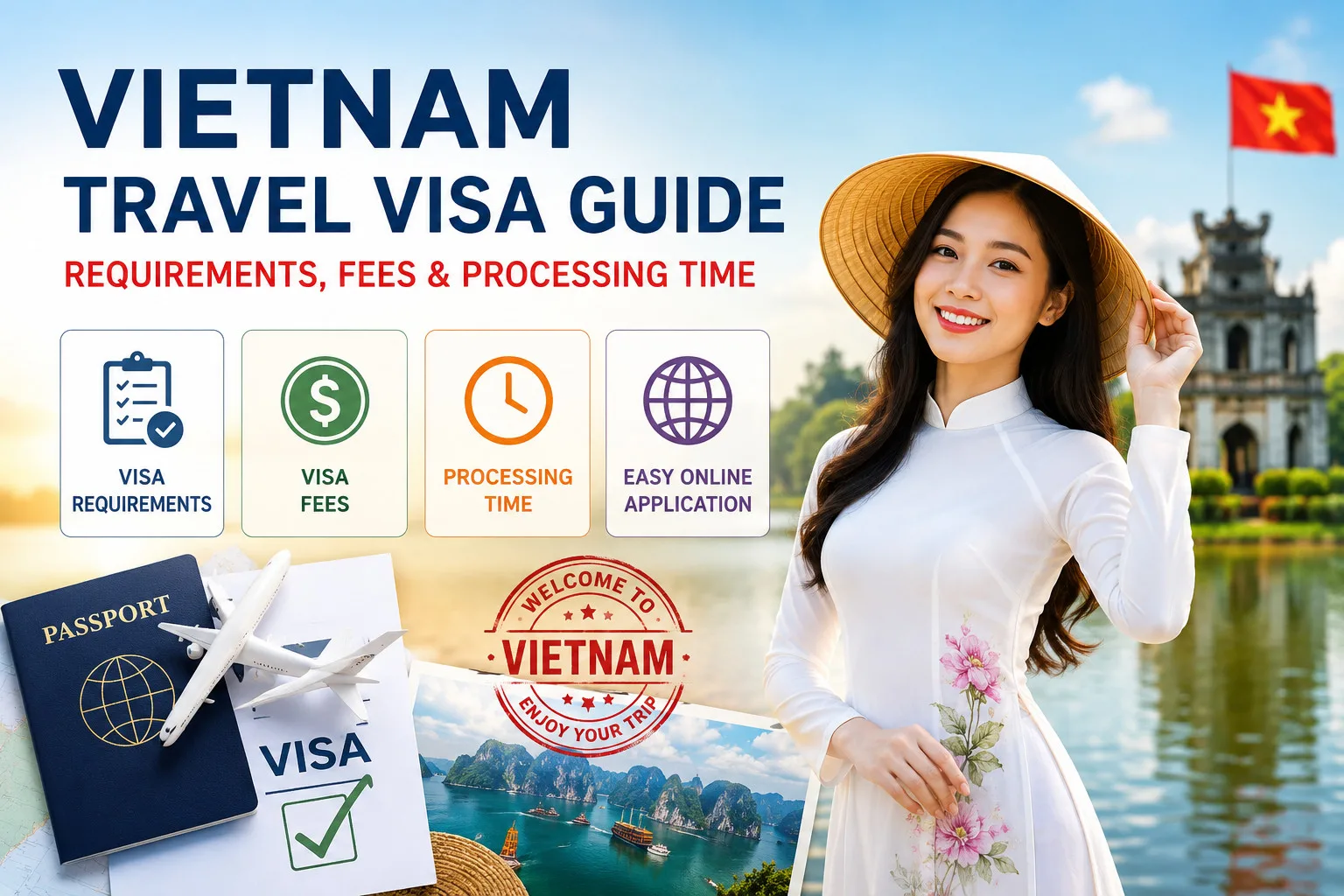
This Vietnam travel visa guide explains the latest requirements, visa fees, processing time, application steps, and common mistakes to avoid when applying for a Vietnam visa online.
What Is a Vietnam Travel Visa?
A Vietnam travel visa is an official permission issued by the Vietnamese authorities that allows foreign citizens to enter, stay, and exit Vietnam for a specific period. For tourism purposes, most travelers apply for a Vietnam tourist visa or Vietnam e-visa.
The Vietnam e-visa is currently one of the most convenient options for foreign travelers. It is issued online by the Vietnam Immigration Department and can be valid for up to 90 days, with single-entry or multiple-entry options. Foreigners outside Vietnam can apply personally or through requesting agencies and organizations.
Who Needs a Visa to Travel to Vietnam?
Visa requirements depend on the traveler’s nationality. Some passport holders are eligible for visa exemption for a limited number of days, while others must apply for a visa before arrival.
Travelers should check carefully before booking flights because overstaying or entering with the wrong visa type may cause problems at the airport or border checkpoint. In general, foreign visitors who are not covered by Vietnam’s visa exemption policy should apply for a valid visa before entering Vietnam.
For many nationalities, the Vietnam e-visa is the most popular choice because the application can be completed online without visiting an embassy.
Vietnam E-Visa Requirements
To apply for a Vietnam e-visa, foreign travelers usually need to prepare the following:
- A valid passport
- Passport validity long enough for the intended stay
- A clear scan or photo of the passport information page
- A recent portrait photo, looking straight and without glasses
- Valid email address
- Intended entry and exit dates
- Intended entry and exit checkpoint
- Address in Vietnam, such as hotel or temporary residence
- Online payment method
According to the official Vietnam Immigration e-visa portal, applicants must upload the passport data page and a portrait photo, then pay the e-visa fee online. After submission, the applicant receives a registration code to check the result.
Vietnam E-Visa Validity
The Vietnam e-visa can be valid for a maximum of 90 days. Travelers can choose either single entry or multiple entries depending on their travel plan.
A single-entry visa allows the traveler to enter Vietnam one time only. Once the traveler exits Vietnam, the visa cannot be used again.
A multiple-entry visa allows the traveler to enter and exit Vietnam multiple times during the visa validity period. This option is useful for visitors who plan to travel between Vietnam and nearby countries such as Thailand, Cambodia, Laos, Singapore, or Malaysia.
Vietnam Travel Visa Fees
The official Vietnam e-visa government fee is:
- USD 25 for a single-entry e-visa
- USD 50 for a multiple-entry e-visa
The official e-visa fee is paid online and is generally non-refundable if the application is refused.
If travelers apply through a visa service provider, there may be an additional service fee. This fee may cover form checking, document review, urgent support, customer service, or application assistance. The total cost will depend on the visa type, processing speed, and service package.
Vietnam Visa Processing Time
The standard processing time for a Vietnam e-visa is usually around 3 working days after the application and payment are completed.
However, in practice, travelers should apply earlier because processing may take longer during peak travel seasons, public holidays, weekends, or when the application contains incorrect information. Some visa service providers recommend allowing 5–7 working days for safer planning, especially before international flights.
To avoid travel disruption, foreign visitors should not wait until the last minute. The best recommendation is to apply at least 1–2 weeks before departure.
How to Apply for a Vietnam Travel Visa Online
The Vietnam e-visa application process is simple, but accuracy is very important.
Step 1: Prepare Required Documents
Before starting the application, prepare a clear passport scan and a recent portrait photo. The passport information must be readable, including full name, date of birth, nationality, passport number, issue date, and expiry date.
Step 2: Complete the Online Application Form
Applicants need to fill in personal information, passport details, travel dates, entry checkpoint, exit checkpoint, and address in Vietnam. All information must match the passport exactly.
Even a small mistake in name, date of birth, passport number, or nationality may cause delays or rejection.
Step 3: Upload Passport and Photo
Upload the passport data page and portrait photo according to the system requirements. Blurry, cropped, dark, or incorrect photos may cause the application to be delayed.
Step 4: Pay the Visa Fee
After completing the form, the applicant pays the e-visa fee online. The official fee is USD 25 for single entry and USD 50 for multiple entries.
Step 5: Check Visa Result
After submission, the applicant receives a registration code. This code is used to check the application status and download the e-visa result from the official system.
Step 6: Print or Save the E-Visa
Once approved, travelers should download and print the e-visa. It is also recommended to save a digital copy on a phone or email for backup.
Vietnam Visa on Arrival
Visa on arrival is another visa option, but it is different from the e-visa. Travelers normally need a pre-approval letter before flying to Vietnam. After arrival at an international airport, they present the approval letter, passport, photo, and pay the stamping fee to receive the visa stamp.
Visa on arrival is generally used for air entry only and may involve service fees and stamping fees. Some official and consular sources note that visa on arrival requires a pre-approval letter before the traveler can receive the visa at the airport.
For most tourists, the e-visa is usually more convenient because the visa is approved before departure and can be used at approved international checkpoints.
Embassy or Consulate Visa
Foreign travelers may also apply for a visa through a Vietnamese embassy or consulate abroad. This option may be suitable for travelers who need a visa type not available through the e-visa system, or who prefer to receive a visa before traveling.
Processing time and fees vary depending on the embassy or consulate. Applicants should contact the relevant Vietnamese diplomatic mission for the latest requirements, fees, and processing schedule.
Common Mistakes When Applying for a Vietnam Visa
Many visa delays happen because of simple mistakes. Travelers should avoid the following:
- Entering the wrong passport number
- Using an incorrect date of birth
- Selecting the wrong nationality
- Choosing the wrong entry checkpoint
- Uploading a blurry passport image
- Uploading an unsuitable portrait photo
- Applying too close to the flight date
- Forgetting to check the visa result
- Assuming weekends and holidays are working days
- Booking flights before confirming visa approval
Before submitting the application, travelers should review every detail carefully.
Important Notes for Foreign Travelers
Travelers should remember that visa approval does not automatically guarantee entry. Immigration officers at the border still have the authority to check documents and make the final decision.
Visitors should prepare:
- Valid passport
- Approved e-visa or visa document
- Return or onward ticket if required
- Hotel booking or address in Vietnam
- Travel itinerary
- Supporting documents if requested
The information on the visa must match the passport exactly. If the passport number, name, date of birth, or nationality is wrong, the traveler may be denied boarding or refused entry.
When Should You Apply for a Vietnam Visa?
The best time to apply is at least 7–14 days before departure. Although the official processing time may be around 3 working days, delays can happen. Applying early gives travelers enough time to correct mistakes, provide additional information, or reapply if necessary.
For urgent trips, travelers may consider using a professional visa support service to check documents and assist with faster processing options where available.
Why Use a Vietnam Visa Support Service?
Although travelers can apply directly through the official government portal, many foreigners choose visa support services because they want assistance with document checking, form completion, urgent cases, or error correction.
A professional visa support service may help:
- Review passport and photo quality
- Check application information before submission
- Reduce common mistakes
- Provide guidance on visa type
- Support urgent travel situations
- Assist travelers who are unfamiliar with the online system
This can be especially useful for first-time visitors, business travelers, families, elderly travelers, or passengers with urgent flights.
Final Checklist Before Traveling to Vietnam
Before departure, make sure you have:
- Passport valid for travel
- Approved Vietnam visa or e-visa
- Printed visa copy
- Digital backup copy
- Correct entry checkpoint
- Confirmed flight ticket
- Hotel or accommodation address
- Travel insurance if needed
- Emergency contact information
Checking everything before departure can help make your arrival in Vietnam smoother and stress-free.
Conclusion
Vietnam is a beautiful and welcoming destination, but foreign travelers should prepare their visa carefully before arrival. The Vietnam e-visa is one of the easiest options for many international visitors, with online application, single or multiple entry choices, and validity of up to 90 days.
The official e-visa fee is USD 25 for single entry and USD 50 for multiple entries, while the standard processing time is usually around 3 working days. However, travelers should apply early to avoid delays caused by holidays, peak seasons, incorrect information, or document issues.
By understanding Vietnam travel visa requirements, fees, processing time, and application steps, foreign visitors can enter Vietnam with confidence and enjoy a smooth journey from the very beginning.
Contact for Urgent Visa Support
- Hotline / WhatsApp / Zalo: +84986979330
- Email: support@vietnamevisaservice.vn
Note: vietnamevisaservice.vn is a commercial/personal website, NOT an official government website. We operate as a private agent and charge a fee for application services. If you do not require our simplified forms and visa application support, you can apply directly on the official government website.